
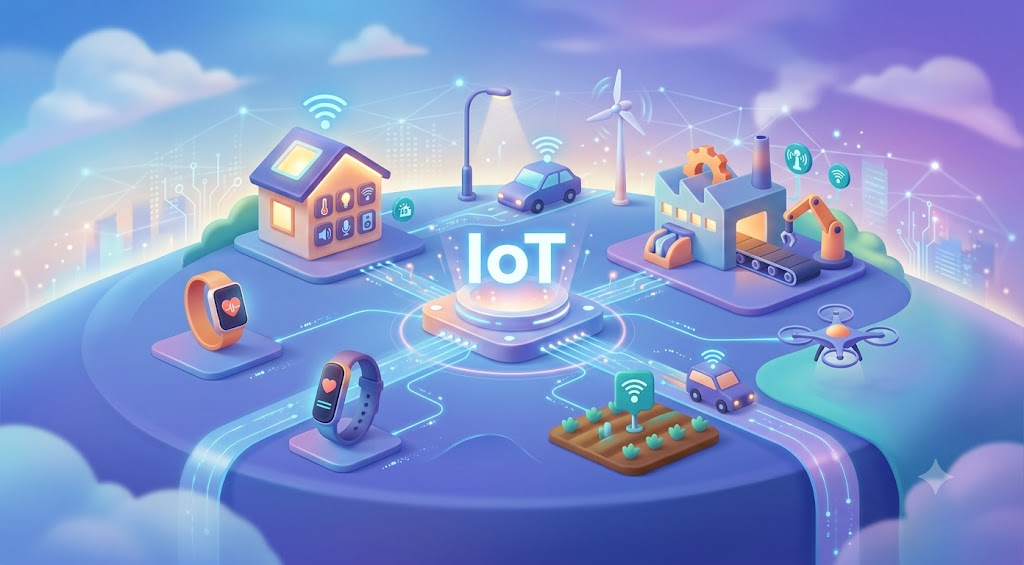
The Internet of Things, commonly known as IoT, has quietly transformed the way we interact with everyday devices. From smart thermostats to fitness trackers, IoT technology connects physical devices to the internet, allowing them to collect and exchange data seamlessly. This guide explains IoT basics in simple terms, helping beginners understand this rapidly growing area of technology.
What Is the Internet of Things?
The Internet of Things refers to a network of physical devices embedded with sensors, software, and other technologies that enable them to connect and exchange data with other devices and systems over the internet. These devices range from everyday household items like smart light bulbs to industrial equipment used in manufacturing processes.
In simple terms, IoT allows everyday objects to become “smart” by giving them the ability to collect data, communicate with other devices, and often respond automatically based on that data, without requiring constant human intervention.
How Does IoT Work?
Understanding IoT becomes easier when broken down into its key components:
1. Sensors and Devices
IoT devices are equipped with sensors that collect data from their environment, such as temperature, motion, or light levels. These sensors form the foundation of IoT functionality.
2. Connectivity
Collected data is transmitted through various communication methods, such as Wi-Fi, Bluetooth, or cellular networks, allowing devices to connect to the internet and communicate with other systems.
3. Data Processing
Once data is transmitted, it is processed either locally on the device or through cloud-based systems. This processing allows devices to analyze information and make decisions based on predefined rules or patterns.
4. User Interface
Most IoT devices include a user interface, often through a mobile app, allowing users to monitor and control connected devices remotely.
Everyday Examples of IoT
IoT technology has become increasingly common in daily life, often without users realizing the underlying complexity:
- Smart Home Devices: Thermostats, security cameras, and smart lighting systems that can be controlled remotely through mobile apps.
- Wearable Technology: Fitness trackers and smartwatches that monitor health metrics like heart rate and step count.
- Smart Appliances: Refrigerators, washing machines, and other household appliances that offer remote monitoring and automated functionality.
- Connected Vehicles: Modern cars equipped with IoT sensors that provide real-time diagnostics, navigation assistance, and safety features.
- Industrial IoT: Manufacturing equipment embedded with sensors that monitor performance and predict maintenance needs, improving operational efficiency.
Beginners looking to understand these applications in more depth often explore platforms like TechInGot, which provide simplified breakdowns of IoT technology and its practical uses across various industries.
Benefits of IoT Technology
Understanding the advantages of IoT helps explain its widespread adoption across both personal and industrial applications:
Increased Efficiency: IoT devices can automate routine tasks, saving time and reducing manual effort in both households and businesses.
Improved Monitoring: Real-time data collection allows for better tracking of performance, health metrics, or environmental conditions.
Cost Savings: In industrial settings, predictive maintenance enabled by IoT sensors can prevent costly equipment failures by identifying issues before they escalate.
Enhanced Convenience: Smart home devices allow users to control various aspects of their environment remotely, improving overall convenience and comfort.
Better Decision-Making: Access to real-time data enables more informed decision-making, whether managing personal health or optimizing business operations.
Challenges and Concerns with IoT
Despite its benefits, IoT technology also presents certain challenges that beginners should be aware of:
Security Risks: Since IoT devices are connected to the internet, they can be vulnerable to hacking if not properly secured, potentially exposing personal data or allowing unauthorized access to connected systems.
Privacy Concerns: Many IoT devices collect personal data, raising concerns about how this information is stored, used, and shared by manufacturers.
Interoperability Issues: With numerous manufacturers producing IoT devices, ensuring compatibility between different brands and systems can sometimes be challenging.
Dependence on Connectivity: IoT devices rely heavily on stable internet connections, and any disruption can affect their functionality.
How to Get Started with IoT as a Beginner
If you’re new to IoT technology, here are some practical steps to explore this field:
- Start with simple, beginner-friendly smart devices, such as smart plugs or basic home automation systems, to understand practical applications.
- Research security best practices, such as changing default passwords and regularly updating device firmware, to protect your connected devices.
- Follow updated technology blogs covering IoT developments across various industries, from smart homes to healthcare.
- Gradually explore more advanced concepts, such as IoT programming and sensor integration, as your interest and understanding grow.
IoT in Various Industries
Beyond personal use, IoT technology plays a significant role across multiple industries:
Healthcare: Remote patient monitoring devices allow healthcare providers to track patient health metrics in real time, improving care for chronic conditions.
Agriculture: Smart sensors help farmers monitor soil conditions, weather patterns, and crop health, improving yield and resource management.
Retail: IoT-enabled inventory systems help businesses track stock levels in real time, reducing shortages and improving supply chain efficiency.
Transportation: IoT sensors in vehicles and infrastructure improve traffic management, vehicle diagnostics, and overall transportation safety.
The Future of IoT Technology
As IoT technology continues to evolve, its integration with artificial intelligence and 5G connectivity is expected to enhance device capabilities significantly. Faster data processing, improved security measures, and more sophisticated automation are likely to expand IoT applications across even more aspects of daily life and industry.
Final Thoughts
The Internet of Things represents a significant shift in how everyday devices interact with the world around us, offering increased convenience, efficiency, and data-driven insights. For beginners, understanding these foundational concepts provides a solid starting point for exploring the growing world of connected technology, whether in personal, home, or industrial applications.
If you’re interested in writing about IoT, smart technology, or related innovations, many technology blogs actively welcome new contributors. Exploring write for us opportunities on relevant platforms can be a great way to share your knowledge while helping others understand this increasingly important area of technology.